

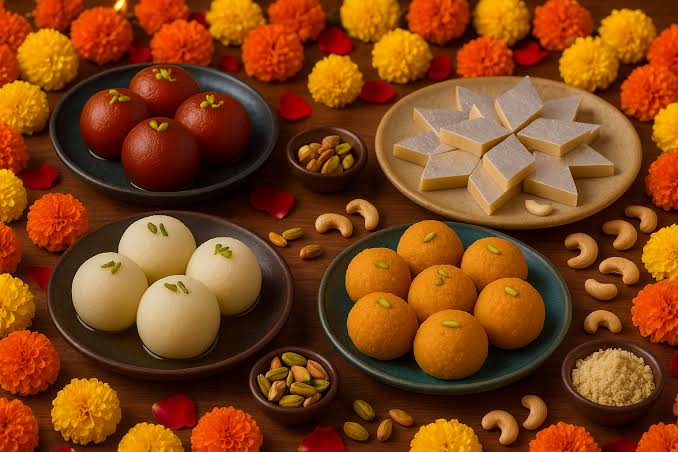
Picture a festive gathering where a glossy dessert counter is lined with cheesecakes, chocolate creations and delicately arranged modern mithai. Then someone opens a familiar box of Kaju Katli. A piece is picked almost immediately, then another. The same pattern appears at weddings, Diwali visits and family celebrations because classic mithai carries flavours people already associate with celebration and home. Recipes may be presented differently, packaging may look more refined and new flavour combinations may appear, yet the classics keep returning. So, what gives them such power? Let us explore:
Which Classic Indian Sweets Keep Finding Their Way Back Onto the Table?
Kaju Katli, Laddu, Gulab Jamun, Barfi and Ghewar continue to return to Indian tables during festivals, family gatherings and special occasions. Each of these has its own story, often determined by a season, a regional tradition or an old family ritual.
Kaju Katli
Kaju Katli became closely associated with festive gifting, especially during Diwali, where its fine texture and diamond-shaped pieces make it a common choice for sweet boxes. Its place in celebrations has carried across generations.
Laddu
Laddu comes in countless forms, with ingredients changing according to region and season. Winter favourites such as Gond Laddu and Til Laddu use ghee, jaggery, sesame, nuts and dry fruits, linking these sweets with seasonal cooking traditions at home.
Gulab Jamun
Gulab Jamun remains one of the classic sweets associated with festive celebrations such as Diwali. It often appears alongside Kaju Katli, Barfi and Laddu, showing how certain mithais continue to define the traditional Indian sweet box.
Barfi
Barfi covers a broad family of milk-based sweets, with different versions prepared using ingredients such as nuts, milk and sugar. Its place in Diwali assortments and family celebrations has made it one of the enduring names in Indian mithai.
Ghewar
Ghewar follows the monsoon calendar in a way few sweets do. Rajasthan associates its crisp honeycomb structure with Teej, Sawan and Raksha Bandhan, turning its seasonal arrival into part of the festive rhythm.
What Makes Traditional Mithai Feel Relevant Even When Tastes Change?
Taste trends move quickly, but the role of mithai in Indian life has changed far less. A new dessert can attract attention for a season, yet traditional sweets remain tied to moments people repeat every year.
- Festivals give them a fixed place. Diwali brings Kaju Katli, Laddu and Barfi, with Holi introducing Gujiya and Ganesh Chaturthi bringing Modak. These associations are built through repeated family celebrations.
- They carry personal memories. A particular sweet may recall a grandmother’s kitchen, a childhood festival or the box brought home by a parent.
- They reflect regional traditions. Ghewar, for instance, connects its taste and texture with Rajasthan’s monsoon celebrations, Teej and Raksha Bandhan.
- They can change without losing their identity. Packaging, portion sizes and presentation may shift subtly with new buying habits, yet the core flavour and recipe still stay the same.
This sense of proportion gives classic mithai adequate space to evolve without losing the traditions that gave it meaning.
Have Modern Mithai Trends Replaced Traditional Sweets or Simply Given Them a New Look?
Modern mithai has changed the presentation far more than it has changed the place of traditional sweets. Classic flavours are now appearing in new formats, with contemporary ingredients and packaging bringing an updated look to recipes people already know.
- Petite mithai has become more common. In this form, it becomes easier to serve traditional sweets at modern gatherings and curated dessert tables.
- Premium ingredients and unusual combinations have entered the mix. Coffee, matcha, white chocolate, rose and pistachio are being paired with established mithai flavours.
- Gifting has taken a polished turn, with artful boxes, collectable tins and carefully arranged assortments becoming part of the experience.
- Traditional combinations such as jalebi with rabri and gulab jamun still retain their place. This shows that newer dessert styles have not pushed classic pairings aside.
- Even chocolate has found room beside mithai, with flavours such as saffron, cardamom and gulkand appearing in contemporary chocolate creations.
The result is less a replacement and more a change of expression. The shape, packaging or flavour pairing may surprise you, but the heart of the mithai often remains recognisable.
Can Traditional Mithai Keep Up With Health-Conscious Consumers?
Health-conscious eating has changed how people eat sweets, but mithai remains part of festive celebrations. People are choosing smaller portions, checking ingredients and trying recipes that use dates, jaggery or other alternatives to traditional sugar.
Here are some points that matter when choosing mithai-
- Check the sweetener. Jaggery or dates may replace refined sugar in some recipes, but the sweet still needs to be enjoyed in moderation.
- Look at the portion. A small piece of a rich Barfi or Laddu can be enough when several desserts are being served.
- Pay attention to the ingredients. Nuts, milk and ghee remain common in traditional mithai, so the recipe itself matters as much as the label.
- Look for clear preparation details. Health-focused buyers increasingly want to know what goes into their food and how it has been made.
- Do not assume “lighter” means healthier. A sweet made with an alternative ingredient can still be energy-dense, so portion size remains relevant.
Traditional mithai can adapt to changing food preferences without losing its character. The wiser approach is not to turn every sweet into a health food, but to choose thoughtfully and enjoy it as part of the occasion.
Final Thoughts
Dessert trends will keep changing, with one flavour becoming fashionable and another taking its place. Mithai has already lived through plenty of such shifts. Kaju Katli will still appear in the Diwali box, Ghewar will return with the monsoon, and Laddu will find its way into another family celebration. Perhaps that is the real charm of traditional sweets. They can take on new shapes, new packaging and even new flavour combinations without losing what made people reach for them in the first place. Trends come and go, but mithai? Always retains its place at the table.