

If you are a new mum (or helping one) and searching for Confinement Recipes that feel “proper” but are still doable at home, you are not alone. In Singapore, confinement can run about 28 to 30 days for many Chinese families, and up to 44 days in some Malay households, so the meals add up fast.
When you are sleep-deprived, healing, and feeding round the clock, the last thing you need is a complicated plan or hard-to-find ingredients. These five easy recipes focus on warm, cooked, familiar flavours that support recovery while remaining practical for first-time parents or families with no one to cook for.
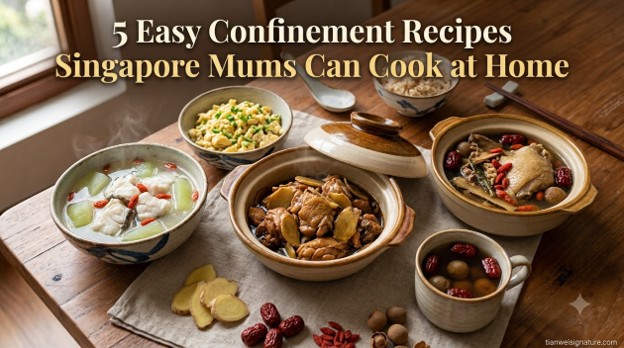
Confinement Recipes: 5 Easy Home Dishes Singapore Mums Can Make
Before we cook, a simple reminder of what most confinement recipes Singapore aim to do: keep the body warm, rebuild strength after blood loss, and make it easier to eat and digest.
From a nutrition angle, many postnatal guides overlap on the basics: prioritise protein (healing), iron (replenishment), calcium (bone support), and omega-3 fats (especially if you are breastfeeding).
If you are breastfeeding, hydration matters too. Warm water, soups, and warm teas all count. There is no medical basis to avoid plain water completely, so drink when you are thirsty.
Quick shopping list (covers all 5 recipes)
- Old ginger, garlic
- Sesame oil, light soy sauce
- Chicken (thighs), white fish (threadfin/ikan merah), eggs
- Green papaya, red dates, and goji berries
- Dang gui (optional, from medical hall)
- Rice (for porridge) or vermicelli (optional)
If you want inspiration for what a more complete, rotating confinement line-up can look like across the weeks, you can browse ideas on Tian Wei Signature’s site here: see the full menu.
Recipe 1: Sesame Oil Ginger Chicken (simple week-1 classic)
This is the “I need something warming now” confinement meals recipe. Ginger is traditionally believed to help warm the body and dispel “wind”. Chicken provides protein for recovery.
For breastfeeding mums, you can add a little garlic for flavour. Garlic and ginger are also ingredients commonly used to support breast milk supply.
Ingredients (2 servings)
- 300 to 400 g chicken thigh, sliced
- 10 to 15 slices of old ginger
- 5 tbsp sesame oil
- 1 tbsp light soy sauce
- 150 ml water
- Optional: 1 tsp rice wine (skip or reduce if preferred)
Method
- Heat sesame oil on low to medium heat. Fry the ginger until fragrant.
- Add the chicken and stir-fry until the outside turns opaque.
- Add soy sauce and water. Cover and simmer 8 to 10 minutes.
- Taste and adjust with a splash more water if you want more gravy.
Breastfeeding-friendly tip
- If using rice wine, keep it minimal and consider feeding or expressing before the meal, then waiting a couple of hours before the next feed.
Recipe 2: Green Papaya Fish Soup (light, comforting, breastfeeding-friendly)
Green papaya is a staple during confinement in Singapore. It is commonly used in soup that supports breast milk supply, especially when paired with fish and served warm.
This recipe for confinement food is also great when your appetite is low, because it is soothing and easy to sip.
Ingredients (2 to 3 servings)
- 250 g white fish slices (or fish bone for more flavour)
- 2 cups green papaya, peeled and cubed
- 6 to 8 slices of ginger
- 2 litres of water
- Salt to taste
Method
- Bring water to a boil with ginger and papaya.
- Reduce to a simmer for 20 minutes until the papaya softens.
- Add the fish slices and simmer for 3 to 5 minutes, until just cooked.
- Season lightly with salt.
Optional add-ons
- A few goji berries at the end for colour and gentle sweetness (contains Vitamin C).
Recipe 3: Ginger Egg Stir-Fry (10-minute protein fix)
On days when you have zero energy, this is the fastest option that still feels like confinement food. Eggs are an easy source of protein and contain Vitamin D. Ginger keeps it warm and fragrant.
If you are tired of plain eggs, this small twist makes it feel more “confinement-approved” without extra work.
Ingredients (1 to 2 servings)
- 2 to 3 eggs, beaten
- 6 to 8 slices of ginger, julienned
- 1 tsp sesame oil (or cooking oil)
- Optional: 1 clove garlic, sliced
- Pinch of salt
Method
- Warm the oil, then fry the ginger (and garlic, if using) until aromatic.
- Pour in the egg, and scramble gently.
- Season lightly and serve with warm rice or porridge.
Make it a fuller meal
- Add a bowl of warm soup or a side of blanched leafy greens.
Recipe 4: Dang Gui Red Date Chicken Soup (one-pot, freezer-friendly)
Dang gui (Chinese angelica) is traditionally believed to nourish blood and support postnatal recovery. Red dates add natural sweetness and comfort.
Important: herbal ingredients can affect individuals differently. If you have medical conditions, are on medication, or your baby has jaundice concerns, check with a qualified professional.
Ingredients (3 to 4 servings)
- 400 g chicken (drumsticks or thighs)
- 6 to 8 red dates, pitted
- 1 to 2 slices dang gui (optional)
- 5 to 6 slices of ginger
- 5 litres of water
Method
- Blanch chicken briefly (optional, for clearer soup).
- Add water, ginger, chicken, red dates, and dang gui.
- Simmer 60 to 90 minutes (or 25 minutes in a pressure cooker).
- Season lightly to taste.
Batch-cook tip
- Freeze in single portions so you can reheat when you are home alone with the baby.
Recipe 5: Red Date Longan Goji Tea (warm drink you will actually finish)
Warm drinks are a big part of confinement because they are easy to consume while resting. This tea is traditionally believed to support energy and circulation. It also helps many mums sip more fluids without forcing them to drink plain water.
Think of it as the easiest “daily add-on” to your best confinement food Singapore plan.
Ingredients (2 to 3 cups)
- 6 red dates, pitted
- 10 to 15 dried longan
- 1 tsp goji berries
- 600 to 700 ml of water
Method
- Simmer red dates and longan for 15 minutes.
- Add goji berries in the last 2 minutes.
- Serve warm.
Sugar note
- Dried longan is naturally sweet. Skip any added sugar if you can.
A simple “mix-and-match” schedule (so you stop overthinking)
Here is a beginner-friendly rotation you can repeat. It keeps cooking realistic while covering a variety.
| Time | Easy option | Why it works |
| Lunch | Sesame oil ginger chicken + rice | Warm, protein-focused |
| Mid-afternoon | Red date longan tea | Warm hydration |
| Dinner | Green papaya fish soup + egg stir-fry | Light supports breast milk supply |
If you are building a bigger confinement meals recipe routine, aim for:
- 1 main protein dish daily
- 1 soup daily
- 1 warm drink daily
- Plenty of warm fluids in between
Common confinement myths (so you can breathe)
Myth 1: “No plain water allowed.”
- Hydration supports recovery and breastfeeding. Warm water is fine, and often more comfortable than iced drinks.
Myth 2: “More wine and stronger herbs mean faster recovery.”
- Excess alcohol is not necessary, and alcohol can pass into breast milk. If you use wine for flavour, keep it minimal and time feeds carefully.
Myth 3: “Confinement food must be oily to be effective.”
- Rich food can feel heavy when your digestion is sensitive. You can keep dishes light but still nourishing.
When home cooking feels impossible (and that is normal)
Some weeks, the hardest part is not the recipe; it is having the time to shop, chop, cook, and wash up while recovering. This is especially true for first-time parents, or when your partner is back at work, and there is no one to cook.
If you want the convenience of two fresh deliveries daily (lunch and dinner), plus a menu that blends traditional Chinese comfort with fusion dishes from Week 2 (think Coq Au Vin, Seared Salmon with Cauliflower Cream, and Braised Pork Trotter in Black Vinegar), you can sort your plan early and activate later.
When you are ready, check availability and book here.
Book Now
Book 1 month before your EDD to enjoy an early-bird discount.