

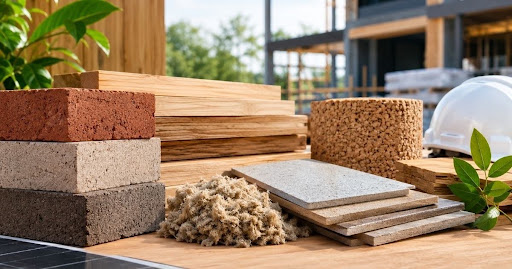
Sustainability now sits at the heart of briefs for residential and commercial schemes alike. Clients ask about embodied carbon, planners want materials that suit their surroundings, and contractors need products that will last without constant repair. The choices you make early on shape all three.
The good news is that a sustainable option is often the sensible long-term option too. So how do you weigh up your materials and make decisions that hold up from specification through to handover?
1. Start With Lifespan, Not Just Factory Carbon
Embodied carbon figures get plenty of attention, but they only tell part of the story. A material with a low production footprint that needs replacing in 20 years can end up costing the planet far more than one built to last for generations. Clay brick has a long track record in UK construction, and Victorian terraces still standing on streets across the country are everyday proof of how well it performs over time.
How a brick is made also affects its footprint. Pinhole bricks, for example, are wirecut units with small perforations running through them. Those holes reduce the clay needed for each brick, lowering its weight and helping it fire evenly in the kiln. Less raw material per unit and lighter loads on delivery vehicles both count when you tally up a project’s environmental impact.
2. Choose Colours and Finishes That Will Age Well
A building that still looks right in 30 years is far less likely to be reclad, rendered or altered, and every avoided intervention saves materials and energy. Neutral, warm tones tend to sit comfortably in a wide range of settings and rarely fall out of fashion.
A golden buff brick is a good example. Buff tones come from clays with a lower iron content, and they suit everything from coastal towns to suburban streets and modern commercial frontages. Blended products offer similar flexibility. The Ibstock Alnwick Blend mixes tones within a single facing brick, giving a wall a varied, natural character rather than a flat, uniform finish. Blends like this also make it easier to match extensions to existing buildings, which removes the temptation to cover a poor match with cladding later on.
3. Check the Paperwork Behind the Product
Green claims are easy to make and harder to prove, so ask for evidence. Useful documents to request include:
- Environmental Product Declarations (EPDs), which set out a product’s measured environmental impact across its life cycle
- BS EN 771-1 compliance for clay masonry units, confirming the product meets the relevant British and European standard
- BES 6001 certification, which covers responsible sourcing of construction products
- ISO 14001 accreditation for the manufacturer, showing a recognised environmental management system is in place
If a supplier cannot provide this information, treat any sustainability claims with caution. Reputable manufacturers publish technical data sheets, and the Brick Development Association is a reliable starting point for independent guidance.
4. Think About Sourcing and Transport
Where a material comes from matters as much as what it is made of. UK-manufactured bricks travel shorter distances to site, which cuts transport emissions and often shortens lead times too. Local sourcing can also help a new building blend with an area’s established character, which planning officers tend to view favourably.
Accurate ordering is another overlooked part of sustainable building. Over-ordering leads to waste, while under-ordering means extra deliveries and possible colour variation between batches. Work from a careful quantity calculation, allow a sensible margin for cuts and breakages, and request samples before committing to a full order. Viewing a sample panel on site, in natural light, is the surest way to avoid costly changes later.
5. Plan for Reuse at the End of Life
Sustainable design looks beyond completion day. Ask how the building could be adapted, extended or taken apart in future. Clay bricks laid in softer mortars can often be cleaned and reclaimed, giving them a second life on another project. Reclaimed bricks themselves are worth considering for some schemes, though supply, consistency and performance should be checked carefully before specifying them.
Simple, durable detailing also helps. Fewer complex junctions mean fewer weak points, less maintenance and a longer working life for the whole envelope.
6. Bring the Right People In Early
Sustainable choices work best when they are made at the design stage rather than swapped in at the last minute. Involve your architect, structural engineer and supplier from the outset so performance, appearance and environmental goals are balanced together. For any structural, external wall or high-rise application, always confirm suitability with a qualified installer or the manufacturer’s technical team before specifying.
Building Better From the Ground Up
Choosing sustainable building materials comes down to a few clear questions. Will it last? Will it still look right in decades to come? Can the supplier back up its claims, and can the material be reused when the building eventually changes? Durable products cut repair and replacement costs, a timeless finish avoids later cosmetic changes, and verified credentials let you answer client and planning queries with evidence rather than marketing claims.
It pays to consider the building’s full life, not just the build phase. The cheapest option at purchase is not always the best value, and materials that can be matched, extended or reclaimed make future changes simpler and less wasteful. Ask these questions early, gather the right evidence and lean on expert advice, and your project will stand as a good investment for your client and a responsible one for the environment.