

If you own more than one automatic watch, you already know that a single watch box on a shelf isn’t going to cut it for long. Automatic movements need care, protection from dust and moisture, and in some cases, motion to keep them running accurately when you’re not wearing them. Get the storage wrong and you risk gasket wear, dried-out lubricants, scratched crystals, and watches that stop the moment you take them off.
This guide walks through the best ways real collectors store and protect a growing watch collection at home, from budget-friendly boxes to secure winder safes built for serious collections.
1. Start With a Proper Watch Box, Not a Drawer
A drawer full of loose watches is one of the fastest ways to damage a collection. Straps rub against each other, clasps scratch cases, and crystals pick up hairline marks nobody notices until it’s too late.
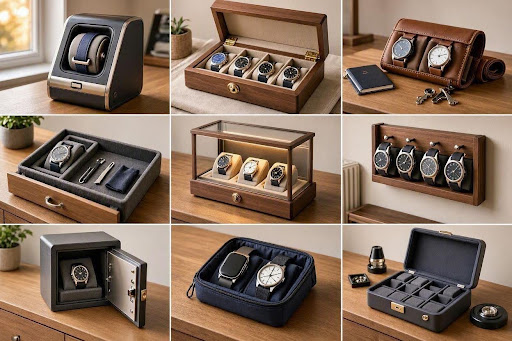
A dedicated watch box with individual cushions or pillows keeps each piece separated and supported. Look for soft, non-abrasive lining, secure lid closures, and enough depth to accommodate larger sports watches or chunky bracelets without forcing the lid shut.
For collectors who are just starting out, a simple multi-slot box is often the right first purchase before investing in anything more advanced.
2. Understand the Difference Between Wood and Leather Boxes
Material matters more than most people assume. Wood boxes tend to offer better structural protection and a more traditional look, while leather boxes are lighter, often more compact, and can feel more premium depending on the finish.
Humidity response is where the two really differ. Wood can be more sensitive to changes in moisture over time, while leather requires occasional conditioning to avoid cracking. If you’re trying to decide which suits your collection and your home environment, this detailed breakdown of wood vs leather watch boxes compares durability, appearance, and long-term care so you can pick based on how and where you’ll actually store your watches.
3. Invest in a Watch Winder for Automatic Pieces You Wear Regularly
Automatic watches rely on wrist motion to stay wound. Leave one sitting still for a few days and it will stop, meaning you’ll need to reset the time and, for watches with a date complication, the date too.
A watch winder solves this by gently rotating the watch at intervals that mimic natural wrist movement. This is particularly useful for:
- Watches with complicated date or moon phase functions that are tedious to reset
- Pieces you rotate through occasionally but want ready to wear at any time
- Watches with a long power reserve that only need light, infrequent winding
Not every watch needs a winder. If you wear a piece daily, it winds itself through normal movement. Winders earn their keep on watches that sit for stretches between wears.
4. Combine Winding With Security Using a Watch Winder Safe
As a collection grows in both size and value, storage becomes as much about security as it is about movement. This is where a dedicated safe with built-in winding modules makes sense.
A watch winder safe keeps your watches wound, protected from dust and light, and locked away from theft or accidental damage, all in one unit. For anyone storing watches worth more than a basic home insurance policy would casually cover, this combination of function and security is worth the investment over a standard box.
When choosing one, check the fire rating, locking mechanism, internal lighting, and how many watches each compartment can hold, since needs change as a collection expands.
5. Control Humidity in the Room, Not Just the Box
Even the best box or safe won’t fully protect a watch if the room itself has poor humidity control. Automatic movements contain tiny amounts of lubricant that can thicken or dry out with fluctuating conditions, and cases with leather straps are especially vulnerable to damp environments.
Aim to keep the storage area between roughly 40% and 55% relative humidity where possible. A small hygrometer costs very little and gives you a clear read on whether your storage spot is actually suitable, rather than guessing.
6. Keep Watches Away From Direct Sunlight and Heat Sources
Sunlight fades dials, degrades leather straps, and can affect lubricant consistency inside the movement over time. Heat sources like radiators, windowsills, or anywhere near a heating vent should be avoided entirely.
A cool, stable, low-light spot, such as an interior wardrobe shelf, a dedicated cabinet, or a safe, is far better than anywhere that gets direct sun for even part of the day.
7. Separate Watches by Value and Frequency of Wear
Not every watch needs the same level of storage. It helps to think in three tiers:
- Daily wearers – a simple, well-ventilated box near where you dress is fine.
- Occasional pieces – a winder-equipped box or safe keeps these ready without daily attention.
- Investment or heirloom pieces – these deserve the highest security, ideally a locked, fire-rated safe with stable internal conditions.
Sorting your collection this way also makes it easier to decide what actually needs a winder and what’s better off simply resting.
8. Service Movements on Schedule, Regardless of Storage Quality
Good storage slows wear but doesn’t eliminate the need for regular servicing. Automatic movements typically benefit from a service every three to five years, depending on the manufacturer’s recommendation, to replace lubricants and check seals.
For guidance on general movement care and servicing intervals, the British Horological Institute is a reliable, independent resource worth reading before choosing a service provider.
9. Buy Storage That Can Grow With Your Collection
Most collectors underestimate how quickly a collection expands once it starts. Buying a two-slot box today often means buying another box in eighteen months. Where possible, choose storage with some spare capacity, or a system that can be added to later, such as stackable boxes or a safe with multiple winding modules.
Specialists such as Aevitas design their ranges with exactly this in mind, offering options that scale from a first watch box through to multi-watch safes for larger, higher-value collections.
Final Thoughts
Storing multiple automatic watches well comes down to three things: keeping each watch physically protected, keeping the ones that need it gently wound, and controlling the environment they sit in. A single good box solves the first problem. A winder solves the second. A safe solves both, plus security, once your collection reaches a point where that matters.
There’s no single right answer for every collector. Someone with two or three daily wearers has very different needs from someone with a dozen pieces spanning different values and occasions. Match the storage to how you actually wear and rotate your watches, and the rest tends to fall into place.
FAQs
Do all automatic watches need a watch winder? No. Watches worn daily wind naturally through wrist movement. Winders are most useful for watches with complicated date functions or ones left unworn for several days at a time.
How many watches can I store in one winder safe? This varies by model, from small units holding two or three watches to larger safes with a dozen or more winding modules. Check compartment count and internal dimensions before buying, especially for larger case sizes.
Is a wood or leather watch box better for humid climates? Leather generally handles minor humidity shifts a little more predictably than wood, though both need to be kept away from damp conditions. A hygrometer in the storage area gives a clearer answer than guessing based on material alone.
How often should an automatic watch be serviced if it’s stored properly? Most manufacturers recommend a service every three to five years regardless of storage quality, since internal lubricants age over time even when a watch isn’t worn.
What humidity level is safest for storing watches? Roughly 40% to 55% relative humidity is a safe general range. Levels outside this can affect both the movement’s lubrication and any leather components over time.
Should I keep my watch box in a wardrobe or on display? A wardrobe or cabinet away from sunlight and heat is generally safer for long-term condition, though display cases work fine if kept out of direct light and away from temperature swings.