


As of 2025, about 95.4% of iOS apps on the App Store are free, indicating a strong tilt toward freemium/ad‑supported models.
Imagine having a revolutionary app idea that could change the way millions interact with technology, but without a clear plan, it might never see the light of day. For entrepreneurs, launching a successful iOS app is like navigating a complex maze: one wrong turn can cost time, money, and credibility.
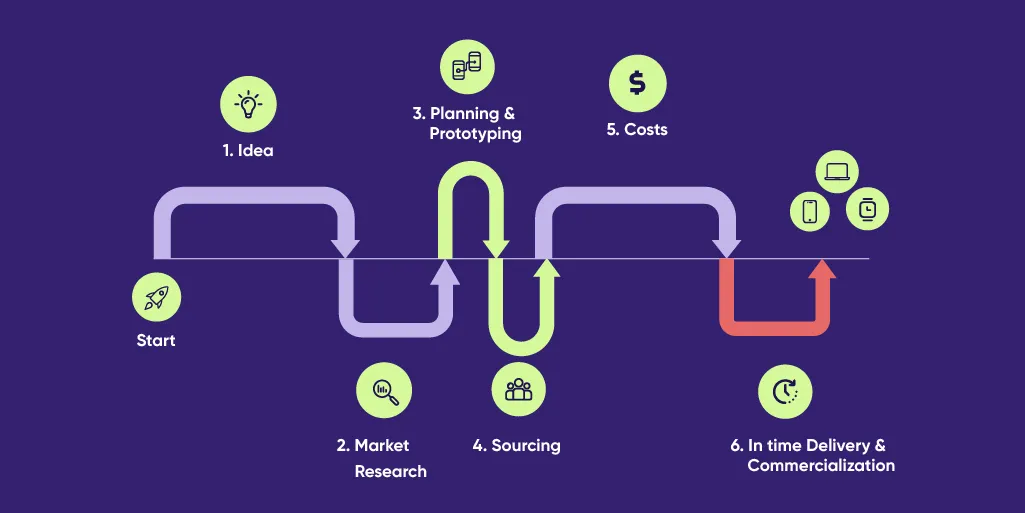
That’s where a well-structured iOS development roadmap becomes your ultimate guide, transforming a concept into a fully functional, market-ready application. By following a strategic roadmap, startups can streamline development, avoid costly pitfalls, and position their app for long-term success.
1. Define Your Vision and Goals
Before diving into coding, every entrepreneur should clearly define the purpose and objectives of their app. Ask yourself: What problem does my app solve? Who is my target audience? And how will it differentiate itself from competitors? Crafting a detailed vision document will serve as the foundation for your iOS development roadmap.
This step ensures that developers, designers, and stakeholders remain aligned, ultimately reducing iterations and avoiding scope creep during development. Transitioning from idea to actionable plan, it is equally important to research your market thoroughly.
Research existing apps, gather feedback from potential users, and analyze market trends. For instance, companies focusing on app development in UK often leverage local user insights to tailor features that resonate with regional audiences, ensuring better adoption and retention.
2. Conduct Technical Feasibility Analysis
Once your vision is defined, the next step in your iOS development roadmap involves assessing technical feasibility. This includes selecting the right programming languages (Swift or Objective-C), identifying the required APIs, and evaluating integration with third-party services.
Entrepreneurs should also consider device compatibility, such as iPhone and iPad versions, screen resolutions, and operating system constraints. A detailed feasibility study helps identify potential challenges early, whether related to backend architecture, cloud infrastructure, or database management. By addressing these concerns beforehand, your development process becomes more efficient, saving both time and cost.
3. Design the User Experience (UX) and User Interface (UI)
User experience is paramount in mobile app success. Following your feasibility analysis, create wireframes and prototypes that visualize app functionality and navigation. Your iOS development roadmap should emphasize intuitive UX and visually appealing UI.
Smooth transitions, responsive gestures, and clear navigation significantly enhance user engagement and retention. Integrating design systems and adhering to Apple’s Human Interface Guidelines ensures that your app feels native and meets user expectations.
Entrepreneurs often collaborate with professional agencies, such as 8ration, to ensure that both aesthetic design and functional design are seamlessly integrated into the development process.
Combined consumer spending on the Apple App Store + Google Play in Q2 2025 was roughly US $40.9 billion, up 11.5% year-over-year.
4. Plan Your Development and Testing Strategy
After finalizing design prototypes, it’s time to plan your development workflow. Agile methodologies are commonly recommended for iOS development, allowing incremental releases and faster feedback loops. Define milestones, sprints, and development phases, which should be clearly outlined in your iOS development roadmap.
Simultaneously, establish a robust quality assurance (QA) and testing strategy. Regular unit tests, integration tests, and user acceptance testing (UAT) will help identify bugs and performance bottlenecks. Ensuring high-quality code and seamless functionality across devices is critical for gaining user trust and positive app store reviews.
5. Prepare for App Store Deployment
Deployment is the final, yet equally crucial, stage in your iOS development roadmap. Registering for an Apple Developer account, configuring app metadata, and adhering to App Store submission guidelines are mandatory steps.
Entrepreneurs should also plan for app marketing, pre-launch campaigns, and feedback collection to optimize the launch impact. It is recommended to use analytics and monitoring tools post-deployment. By tracking user behavior, session durations, and retention rates, you can make data-driven decisions for future updates and enhancements.
6. Continuous Improvement and Scaling
Launching an app is not the end of the journey. Successful entrepreneurs incorporate feedback loops into their roadmap, allowing for continuous updates and feature enhancements. Incorporating AI-driven insights, push notifications, and performance optimization strategies ensures your app remains competitive and relevant.
Moreover, expanding to new markets or platforms can be strategically planned within the iOS development roadmap, facilitating long-term growth and business scalability.
“Design is not just what it looks like and feels like. Design is how it works.” – Steve Jobs, Former CEO, Apple
Final Thoughts!
Navigating the journey from concept to launch demands careful planning and execution. By following a structured iOS development roadmap, entrepreneurs can ensure technical feasibility, superior design, and high-quality development.
Additionally, leveraging insights from seasoned agencies like 8ration can accelerate the process and improve overall app performance. For those targeting specific regions, such as app development in UK, tailoring your roadmap to local user behavior ensures maximum impact.
Ultimately, a clear roadmap reduces risks, optimizes resources, and lays the foundation for a successful iOS application that resonates with users globally.