

Most businesses put real effort into the buying experience. Pages load fast. Checkout feels smooth. Confirmation emails arrive instantly.
Then the order leaves the building.
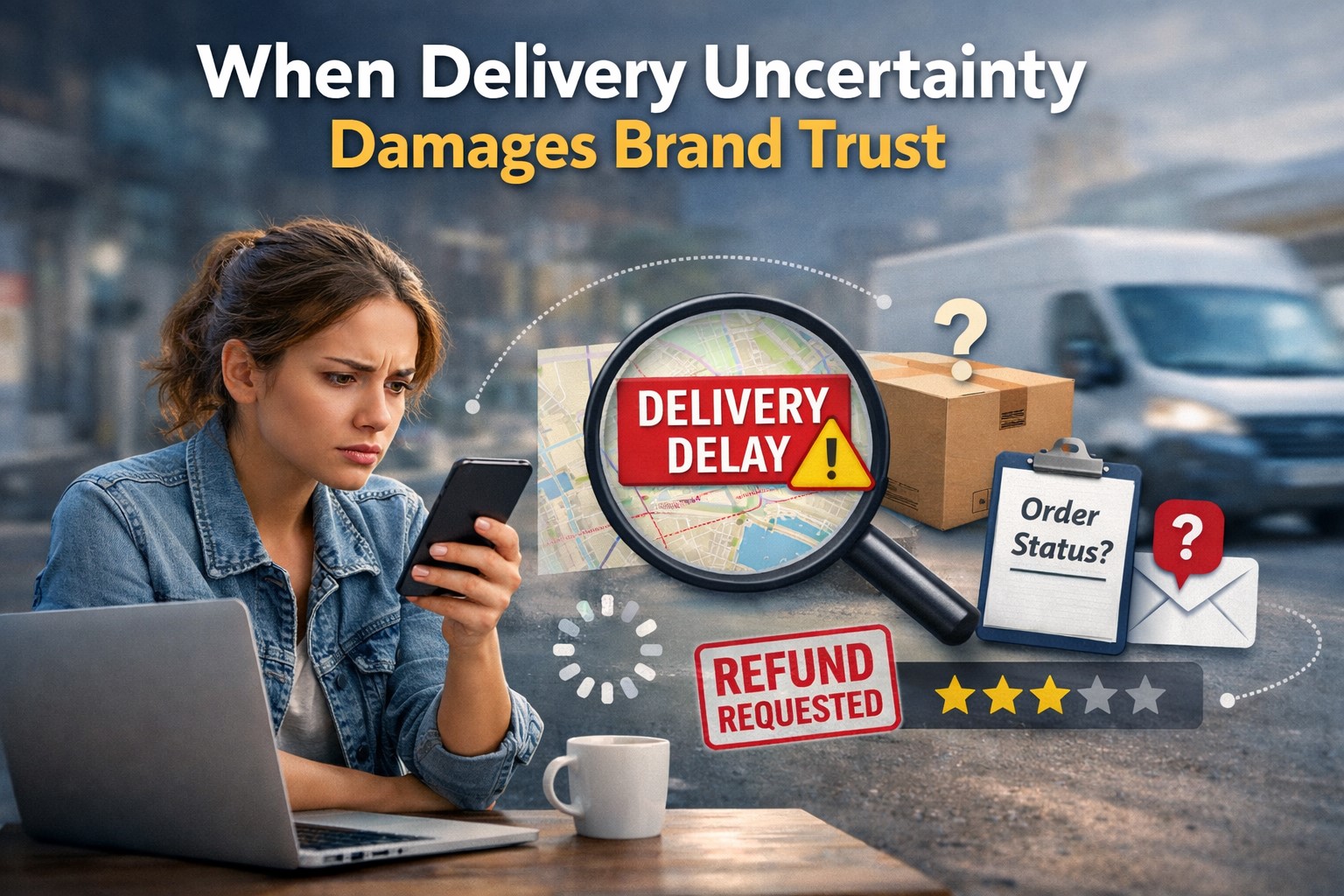
For many customers, this is where confidence starts to thin. Not because anything is broken, but because visibility fades. Updates feel scattered. Tracking links open unfamiliar carrier pages. Delivery timelines become vague enough to invite doubt.
Trust rarely collapses all at once. It usually erodes during moments of silence.
Why Customers Feel Uneasy After Checkout
Once payment is complete, the relationship changes. Customers are no longer deciding whether to buy. They are waiting to see whether the business can follow through.
At this stage, speed matters less than clarity.
A package that arrives late but is clearly explained causes far less frustration than one that goes quiet for days and suddenly shows up. The emotional difference is not logistics performance. It is communication.
Customers want to feel that someone is paying attention.
The Real Cost of Delivery Uncertainty
When delivery updates are unclear, the impact shows up quickly.
Customers start checking inboxes. Then carrier pages. Then they reach out. Support messages increase, often driven by anxiety rather than actual problems.
Internally, teams feel it too. Support staff bounce between carrier dashboards. Operations teams piece together partial scans. Managers spend time calming customers instead of fixing systems.
Nothing is technically failing, yet efficiency drops across the board.
Tracking Alone Does Not Create Confidence
Many businesses assume that sending a tracking number is enough. In practice, tracking only answers a narrow question.
Where is the package right now?
It does not explain whether movement is normal, whether a delay is expected, or whether attention is needed. Customers see activity without context, and context is what builds confidence.
Delivery visibility fills that gap. It connects status with meaning.
Why Visibility Changes Customer Behavior
When customers can clearly see what is happening, their behavior changes.
They wait longer before reaching out. They are more patient with delays. They trust explanations because they can verify progress themselves.
Visibility turns uncertainty into understanding. That shift alone reduces support pressure and improves overall experience.
Internal Benefits Are Just as Important
Clear shipment visibility is not only a customer-facing improvement.
Teams benefit when information is centralized and easy to interpret. Support agents respond faster. Operations teams identify patterns earlier. Managers make decisions based on facts instead of assumptions.
As order volume grows, these efficiencies compound.
How Transparency Strengthens Brand Perception
Customers associate clarity with competence.
A business that communicates clearly feels organized and reliable. One that stays silent feels careless, even if the outcome is the same.
Over time, this perception affects loyalty. Customers are more likely to return to brands that kept them informed after checkout, especially when something did not go exactly as planned.
Making Post-Checkout a Trust-Building Stage
The post-checkout phase should not be treated as dead time. It is part of the customer experience.
Businesses that bring delivery updates into a single, consistent view reduce confusion for both customers and internal teams. When shipment information is unified across couriers, communication becomes easier and expectations become clearer.
Tools like InstantParcels help businesses maintain that clarity by centralizing shipment visibility across carriers. The value is not the data itself, but the confidence it creates throughout the delivery journey.
Trust Is Built Through Information, Not Speed
Delays happen. Mistakes happen.
What customers remember is whether they felt informed when it mattered.
Businesses that invest in delivery visibility replace silence with transparency. In doing so, they protect trust long after checkout is complete.