


Introduction
The manufacturing of critical technology hardware parts, such as those used in medical devices and aerospace systems, faces significant challenges related to precision shortfalls, high costs, and delivery delays. These issues directly impact product reliability and market competitiveness. The core problem often lies in the inflexibility of traditional machining methods, where improper parameter settings lead to excessive tool wear and material waste, failing to meet stringent accuracy demands.
This article explores how advanced CNC milling services provide a solution, integrating sophisticated technology and optimized strategies to balance precision with cost-effectiveness. The following sections will provide a detailed analysis of the key optimization methodologies.
Why Technology Hardware Parts Need High-Precision CNC Milling Services?
The demand for extreme accuracy in sectors like medical and aerospace is non-negotiable. Medical device components, such as surgical instruments and implantable parts, must function flawlessly within the human body, while aerospace manufacturing components are subject to immense stresses and rigorous safety standards. International standards, such as ISO 9001 (which outlines quality management systems, including tolerance control), underscore the importance of adhering to precise specifications to ensure product safety and performance. Traditional machining methods often struggle with consistent tolerance control, which can lead to part failure, costly recalls, and compromised safety.
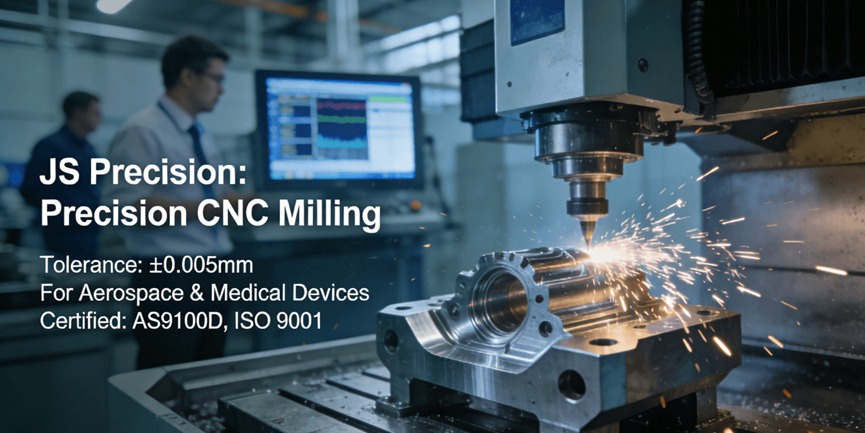
High-precision CNC milling services directly address these limitations. By utilizing computer-controlled processes, these services achieve tolerances as tight as ±0.005mm, significantly reducing the scrap rate and enhancing product consistency. This level of precision CNC milling ensures that every component meets the exact design intent, which is critical for the reliability of end-use products. The repeatability of CNC processes means that once the optimal parameters are set for a specific technology hardware parts batch, the same high level of quality can be maintained throughout the production run, ensuring compliance with international standards like those from the International Organization for Standardization (ISO).
How to Select Suitable CNC Milling Parameters for Different Materials?
Selecting the correct machining parameters is fundamental to achieving desired outcomes in CNC milling machining. The material properties, whether metal or plastic, dictate the optimal cutting speed, feed rate, and depth of cut.
Understanding Material-Specific Machining Dynamics
Different materials react differently to the machining process. For instance, aluminum alloys allow for higher cutting speeds, while titanium requires slower speeds and specific tool geometries to manage its high strength and low thermal conductivity.
Key Parameter Considerations for Optimal Results
The primary goal is to maximize efficiency without compromising tool integrity or part quality. Key parameters include:
- Cutting Speed and Feed Rate:Balancing these is crucial to prevent tool deflection, excessive heat, and premature wear. A resource like the Face Mill Selection Guide provides valuable insights into optimal cutting depths for different tool types.
- Depth of Cut:This affects the material removal rate and the forces acting on the tool. A shallower cut may be necessary for hard materials to protect the tool, while a deeper cut can be used for softer materials to improve productivity.
Practical Application in Medical Device Manufacturing
For medical device components, often made from stainless steel or medical-grade plastics, parameter optimization is critical. For example, machining a delicate surgical tool housing requires fine finishing passes with low feed rates to achieve a superior surface finish and maintain critical dimensions. Adhering to best practices, such as those outlined by the American Society of Mechanical Engineers (ASME), ensures that the manufactured precision CNC milling parts meet the required biocompatibility and performance standards. This careful selection process directly influences the longevity of the tooling and the quality of the final component.
How Does Precision CNC Milling Enhance Aerospace Component Performance?
The aerospace industry demands components that offer an exceptional strength-to-weight ratio and can withstand extreme environmental conditions. Precision CNC milling services are pivotal in meeting these demands. Through advanced 5-axis CNC milling machining, manufacturers can produce complex, lightweight geometries that are impossible to achieve with conventional 3-axis machining. This capability allows for the integration of multiple parts into single, consolidated components, reducing potential failure points and assembly time.
The impact of enhanced CNC milling precision is measurable. For instance, improving the machining tolerance of a turbine blade mount from ±0.02mm to ±0.005mm can lead to a perfect fit during engine assembly, minimizing vibration and maximizing fuel efficiency. This level of accuracy is guaranteed by manufacturers who hold certifications like AS9100D, the aerospace industry’s quality management standard. This certification provides assurance that every step of the manufacturing process, from material sourcing to final inspection, is controlled and documented, ensuring the highest level of reliability for aerospace manufacturing components.
What Are the Cost Optimization Strategies in CNC Milling Services?
While precision is paramount, cost-effectiveness is essential for sustainable manufacturing. Key cost drivers in CNC milling services include material utilization, machine runtime, and tooling expenses. Effective strategies focus on optimizing these factors without sacrificing quality.
Leveraging Design and Production Planning
Intelligent design for manufacturability (DFM) can significantly reduce waste. By designing parts to minimize raw material usage and simplify tool paths, costs are lowered. Furthermore, optimizing the CNC program for the most efficient tool path reduces cycle times and machine wear.
Implementing Efficient Operational Practices
Operational efficiencies are achieved through:
- Batch Production Optimization:Grouping similar parts for production can reduce setup times and material changeovers.
- Advanced Quoting Systems:
- Utilizing online platforms to get an instant CNC milling quote allows for rapid cost assessment and budgeting. This transparency helps in making informed decisions early in the design process.
A practical example involves the production of industrial machinery components. By analyzing the production flow and implementing lean manufacturing principles, a manufacturer can reduce overall part cost by 20%. Additionally, certifications like ISO 14001 demonstrate a commitment to environmental management, which often aligns with cost-saving measures through reduced energy consumption and waste management, proving that sustainable practices can be economically advantageous.
How Will Future CNC Milling Trends Impact Consumer Electronics Parts Manufacturing?
Looking ahead to 2026, emerging trends in CNC milling machining are set to revolutionize the production of consumer electronics parts. The integration of Artificial Intelligence (AI) and increased automation will drive unprecedented levels of efficiency and quality. AI-powered systems can perform real-time monitoring of the machining process, automatically adjusting parameters to compensate for tool wear, thereby maintaining consistent quality and reducing the need for manual intervention.
These advancements are crucial for addressing the industry’s ongoing challenge of miniaturization. The demand for thinner, lighter, and more complex consumer electronics parts requires machining capabilities that can handle microscopic features with impeccable surface finishes. Future precision CNC milling services will leverage AI-driven adaptive control and high-speed micro-machining to meet these demands. This will enable manufacturers of technology hardware parts to not only keep pace with design innovations but also to accelerate time-to-market, maintaining a critical competitive edge in a fast-paced industry.
Conclusion
In summary, precision CNC milling services provide a comprehensive solution for manufacturing high-quality technology hardware parts. Through meticulous parameter optimization, adherence to international standards, and the implementation of strategic cost-control measures, these services enhance product performance, reliability, and affordability. The integration of future technologies promises even greater advancements, solidifying CNC milling’s role as a cornerstone of modern manufacturing.
Optimize your component production today! Visit our online platform for an instant CNC milling quote and leverage professional manufacturing expertise for your projects.
Author Biography
The author is a manufacturing specialist with a decade of experience focused on optimizing CNC milling technologies. JS Precision is a leader in the industry, backed by certifications including ISO 14001, ISO 9001, IATF 16949, and AS9100D, ensuring the delivery of high-quality, reliable manufacturing services.
FAQs
Q1: What are the primary advantages of precision CNC milling services?
A: Precision CNC milling services offer high tolerance control (e.g., ±0.005mm), reduce material waste, and are ideal for medical and aerospace components, thereby enhancing product reliability and production efficiency.
Q2: How to select the appropriate material for CNC milling?
A: Material selection should be based on part requirements; for example, aluminum alloys are chosen for lightweight parts, while stainless steel is selected for corrosion resistance, with reference to machining parameter guides for optimal results.
Q3: Can CNC milling services handle complex geometries?
A: Yes, multi-axis CNC milling can produce complex geometries, such as those required for aerospace components, ensuring precision and strength while minimizing assembly issues.
Q4: How is cost optimization achieved in CNC milling?
A: Cost optimization is realized through batch production, tool path optimization, and online quoting systems, supported by certifications like ISO 9001 that ensure process efficiency, leading to savings of up to 20%.
Q5: What innovations are expected in future CNC milling technology?
A: Trends for 2026 include AI-driven real-time monitoring and automation, which will improve the surface finish of consumer electronics parts, reduce manual intervention, and shorten lead times.