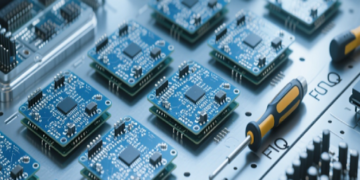



At the heart of nearly every electronic system lies the motherboard—a complex, highly engineered platform that connects, powers, and coordinates all critical components of a device. From consumer PCs and industrial controllers to medical equipment and embedded systems, the motherboard is not just a passive carrier of components, but an active foundation that determines performance, reliability, scalability, and manufacturability. Even seemingly minor design details—such as correct signal routing, impedance control, or understanding a USB pinout—can have a profound impact on system stability and long-term functionality.
This article takes a deep dive into what a motherboard really is, how it works, and why its design and manufacturing require such a high level of discipline. We will explore motherboard architecture, key subsystems, PCB layout challenges, power delivery strategies, signal integrity considerations, and manufacturing best practices. Whether you are a hardware engineer, product manager, or electronics manufacturer, understanding the motherboard at a system level is essential.
What Is a Motherboard?
A motherboard is the primary printed circuit board (PCB) in an electronic system. It serves as the central hub that interconnects all major components, including processors, memory, storage interfaces, power regulators, and peripheral controllers. Unlike daughterboards or expansion cards, the motherboard defines the system’s core architecture and electrical framework.
In personal computers, the motherboard hosts the CPU socket, RAM slots, chipset, and I/O connectors. In embedded or industrial systems, it may integrate the processor directly and expose only application-specific interfaces. Regardless of form factor, the motherboard’s primary functions remain the same:
- Provide mechanical support for components
- Distribute stable and clean power
- Enable high-speed data communication
- Manage system timing, clocks, and resets
- Ensure long-term electrical and thermal reliability
Evolution of the Motherboard
Early motherboards were relatively simple, hosting discrete logic chips and basic expansion slots. As semiconductor integration increased, more functions migrated into chipsets and eventually into the CPU itself. Modern motherboards now accommodate:
- Multi-core processors with integrated memory controllers
- High-speed serial interfaces (PCIe, USB, SATA)
- Dense power management circuits
- Advanced thermal solutions
- Firmware and security subsystems
This evolution has dramatically increased motherboard complexity. Today’s designs often require 8–16 PCB layers, controlled impedance routing, and strict EMC compliance.
Core Components on a Motherboard
Processor and Socket (or SoC)
The processor is the brain of the system. In PC motherboards, it is typically installed in a socket, allowing replacement or upgrades. In embedded designs, the CPU or SoC (System on Chip) is often soldered directly onto the board using BGA packaging.
Key considerations include:
- Power delivery requirements
- Thermal dissipation
- Signal fan-out and escape routing
- Clock distribution
Memory Subsystem
Memory interfaces are among the most sensitive areas of a motherboard. DDR memory requires:
- Tight length matching
- Controlled impedance
- Proper termination
- Clean power rails
Even small layout deviations can lead to signal reflections or timing violations.
Chipset or Platform Controller
In systems where the CPU does not integrate all functions, a chipset handles I/O expansion, storage interfaces, and legacy connectivity. Communication between CPU and chipset typically occurs over high-speed serial links, which demand precise routing rules.
Power Delivery Network (PDN)
The PDN converts input power into multiple regulated voltages required by the system. This includes:
- VRMs (Voltage Regulator Modules)
- Buck converters
- Inductors and capacitors
A robust PDN design is critical for system stability, especially under dynamic load conditions.
Motherboard Interfaces and Connectivity
Motherboards expose a wide range of interfaces to communicate with external devices and internal modules:
- USB (2.0, 3.x, Type-C)
- PCI Express
- SATA and NVMe
- Ethernet
- HDMI / DisplayPort
- GPIO, UART, SPI, I²C (embedded systems)
Each interface comes with unique electrical and layout constraints. High-speed interfaces require differential pair routing, impedance control, and careful reference plane management.
PCB Layout Challenges in Motherboard Design
Designing a motherboard PCB is one of the most challenging tasks in electronics engineering. The following factors must be balanced simultaneously:
High-Density Routing
Modern motherboards often include:
- Fine-pitch BGAs
- Thousands of nets
- Multiple high-speed buses
This requires advanced routing strategies and often HDI (High-Density Interconnect) techniques such as microvias and blind/buried vias.
Signal Integrity
Signal integrity issues such as crosstalk, reflections, and jitter can compromise system performance. Designers must carefully manage:
- Trace length matching
- Impedance discontinuities
- Reference plane continuity
Simulation and pre-layout analysis are commonly used to mitigate risks.
Power Integrity
As processors switch at higher speeds, transient current demands increase. Inadequate decoupling or poor plane design can result in voltage droop and noise, leading to system instability or random failures.
Thermal Management
High-power components generate significant heat. Motherboard design must consider:
- Copper thickness and plane usage
- Thermal vias
- Heatsink attachment points
- Airflow paths
Thermal issues often manifest only after prolonged operation, making them especially critical.
Manufacturing Considerations for Motherboards
A well-designed motherboard must also be manufacturable at scale. Design-for-Manufacturing (DFM) principles are essential.
PCB Fabrication
Key fabrication aspects include:
- Layer stack-up selection
- Material choice (FR-4, high-Tg, low-loss materials)
- Via structures
- Surface finish (ENIG, ENEPIG, OSP)
For high-speed designs, material dielectric properties become increasingly important.
Assembly Process
Motherboard assembly typically involves:
- SMT placement of thousands of components
- Multiple reflow cycles
- Selective soldering for through-hole parts
Component placement order and thermal profiles must be carefully controlled to avoid defects such as tombstoning or solder voids.
Inspection and Testing
Given their complexity, motherboards undergo extensive testing:
- SPI and AOI inspections
- X-ray inspection for BGAs
- ICT and functional testing
Traceability systems are often used to track each board through the production process.
Reliability and Lifecycle Considerations
Motherboards are expected to operate reliably for years, sometimes decades. Reliability engineering focuses on:
- Component derating
- Environmental stress tolerance
- ESD and surge protection
- Long-term thermal cycling effects
In industrial and automotive applications, reliability requirements are significantly stricter than in consumer electronics.
Motherboards in Different Applications
Consumer Electronics
PC and gaming motherboards prioritize performance, expandability, and cost optimization. Aesthetic factors such as RGB lighting may also play a role.
Industrial Systems
Industrial motherboards emphasize:
- Long-term availability
- Wide temperature operation
- Robust connectors
- Stable firmware
Medical and Automotive Electronics
These applications demand:
- Regulatory compliance
- High traceability
- Zero-defect manufacturing strategies
The motherboard often becomes a safety-critical component.
Trends Shaping the Future of Motherboards
Several trends are redefining motherboard design:
- Increasing integration into SoCs
- Higher-speed interfaces (PCIe Gen 5/6)
- Adoption of USB Type-C and Power Delivery
- Greater focus on energy efficiency
- Digital manufacturing and traceability systems
As systems become more compact and powerful, motherboard engineering will continue to push the limits of PCB technology.
Conclusion
The motherboard is far more than a simple circuit board—it is the structural, electrical, and functional backbone of an electronic system. Every decision made during motherboard design, from power architecture to signal routing and material selection, directly affects performance, reliability, and manufacturability.
Understanding the motherboard at a system level enables better design decisions, smoother manufacturing, and more reliable products. As electronic systems continue to evolve, the importance of disciplined motherboard engineering will only grow. Whether you are building a consumer device, an industrial controller, or a mission-critical system, investing in a well-designed motherboard is investing in the success of the entire product.