

When you research postnatal massages Singapore, you will often see therapists mention Jamu paste as part of traditional recovery. Many parents feel curious about it, especially if they want something natural, warming, and grounded in Southeast Asian heritage.
Jamu paste can feel unfamiliar if you grew up without Javanese or Malay postpartum practices. This guide explains what it contains, why therapists use it in postnatal care, and how to choose a safe, comfortable experience at home in Singapore.
What Jamu paste is (and what it is not)
Jamu started in Indonesia around the Mataram kingdom era, and communities have used it for about 1,300 years. People traditionally prepared Jamu from roots, barks, leaves, and spices, and they used it both as drinks and as topical applications.
In postnatal care, therapists commonly use Jamu paste in two forms:
- Tapel: a herbal paste applied over the abdomen
- Pilis: a herbal paste applied on the forehead or temples
Jamu paste does not act like a medicine that “cures” a condition. Instead, therapists use it as part of a supportive routine that focuses on warmth, comfort, and recovery.
What goes into Jamu paste
Different lineages and therapists use slightly different recipes, but many formulas include spices that Southeast Asian families already recognise in cooking.
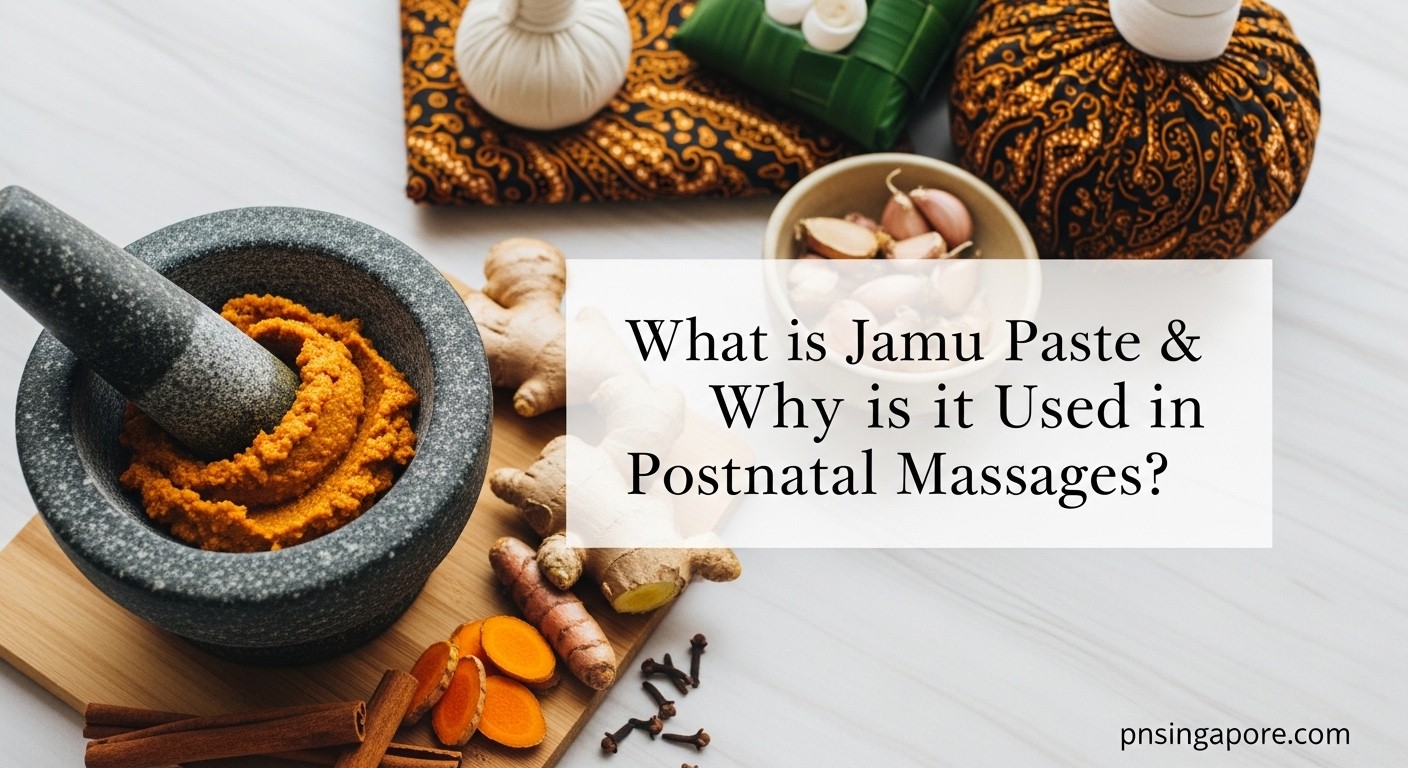
Common ingredients include:
- Turmeric
- Ginger
- Tamarind
- Nutmeg
- Cloves
- Garcinia cambogia (in some blends)
These ingredients matter because they bring warming sensations and aromatic compounds. They also help the treatment feel grounded and soothing, especially when a therapist pairs them with massage techniques and proper aftercare.
Why therapists use Jamu paste in postnatal massages
Postpartum recovery can bring a mix of discomforts: bloating, body aches, fluid retention, and general fatigue from feeding and broken sleep. A therapist often chooses Jamu paste because it complements hands-on massage in a practical way.
Therapists typically use Jamu paste to:
- Create a warming sensation across the abdomen or forehead
- Support relaxation when the body feels “tight” or unsettled
- Pair well with gentle abdominal work that avoids strain
- Add a traditional layer of care that many families value culturally
Jamu also plays a role in the wider Jamu or Bengkung-inspired routine, where families may combine massage, paste application, and belly binding over several weeks. If you choose any binding practice, you should keep it comfortable and never restrict breathing or movement.
A quick, practical table: ingredients and their traditional roles
| Ingredient (common) | How it tends to feel | Why therapists include it in postpartum care |
| Turmeric | Warm, earthy | Supports a comforting, “grounding” experience |
| Ginger | Warming, stimulating | Often used to help the body feel less “cold” after birth |
| Tamarind | Tangy, balancing | Common in traditional blends for overall comfort |
| Cloves, nutmeg | Aromatic, warming | Adds soothing scent and warmth during treatments |
Individual skin sensitivity varies, so a trustworthy therapist checks comfort levels and adjusts as needed.
What a Jamu paste step looks like during a home session
A professional postnatal massage session in Singapore often follows a calm, structured flow. When a therapist includes Jamu paste, the process usually looks like this:
- The therapist asks about your delivery, stitches or incision healing, and current discomforts.
- The therapist performs a full-body massage to ease muscular tension and encourage relaxation.
- The therapist applies Jamu paste to the abdomen (tapel) and sometimes the forehead (pilis), depending on your comfort.
- The therapist leaves the paste on for a short period and then guides you on removal and aftercare.
At-home care matters here. You get to rest in your own space straight after the session, without travel fatigue.
If you want to understand how PNSG structures recovery-focused sessions, you can read more details on their services here.
Why many parents in Singapore prefer home-based postnatal care
In the early weeks, even short trips can feel demanding. Home service also supports hygiene and peace of mind, because you avoid shared treatment rooms and crowded waiting areas.
When you book a home session with PNSG, you also get:
- No travel needed, so you can conserve energy for feeding and rest
- No sharing of space, which many parents value for hygiene
- A large team of 70+ certified therapists, so you can find a suitable slot
- Authentic products chosen with mums and newborns in mind
These factors do not replace medical care, but they can make recovery routines more realistic and consistent.
When to start, and when to pause
Timing depends on your delivery, your healing progress, and your doctor’s guidance. You should always prioritise safety over speed.
Consider these practical checkpoints:
- If you delivered via C-section, ask your doctor when massage around the abdomen becomes appropriate.
- If you have wounds, rashes, or irritation, avoid paste on that area until skin settles.
- If you develop fever, heavy bleeding, severe pain, or dizziness, seek medical care promptly.
If you feel emotionally overwhelmed or notice persistent low mood or intrusive thoughts, speak to a doctor or mental health professional. Postpartum mental health needs qualified medical support.
How to choose a safe Jamu-based postnatal massages package Singapore
Not every package suits every body. A good provider adapts the session to your comfort and recovery stage, and they explain what they plan to do before they start.
When you compare a Postnatal Massages Package Singapore, look for these signs of quality:
- The therapist asks about your delivery and checks for contraindications
- The provider uses authentic products and explains how they source them
- The therapist avoids sensitive areas when appropriate and keeps pressure controlled
- The provider keeps hygiene standards high, especially for home set-ups
- The package focuses on recovery and soothing, not unrealistic “bounce back” promises
PNSG structures its postnatal options clearly, including Signature (recovery), Soothing (recovery plus face spa and naval candling), and Premium (recovery and slimming). You can choose based on how your body feels and what kind of support you want.
Simple aftercare tips after Jamu paste
You can help your body get more comfort from a session by keeping aftercare simple.
Many parents find these habits helpful:
- Drink warm water and eat regular meals to support energy levels
- Keep your room comfortably warm and rest when the baby sleeps
- If paste feels drying, rinse gently and moisturise with a suitable product
- Track how your body responds across sessions, not just on the same day
Consistency matters more than intensity, especially during early recovery.
A calm way to start your Jamu-based recovery plan
Jamu paste sits at the intersection of tradition and practical postpartum comfort. When a certified therapist applies it thoughtfully, it can become a soothing part of your recovery routine, especially when you receive care at home with no travel and no shared spaces.
If you want to plan your sessions with PNSG, book your slot here.