

CNC machining is one of the most essential production technologies these days. Many industries use it to make particular, excellent parts. From automobiles to airplanes, CNC machining performs a first-rate function in modern production.
But why is CNC machining so famous for superior production?
In this article, we are able to provide an explanation for the entirety in very simple phrases. You will learn the way CNC works, why the industry uses it, its advantages, programs, and factors that affect CNC gadget costs.
What Is CNC Machining?
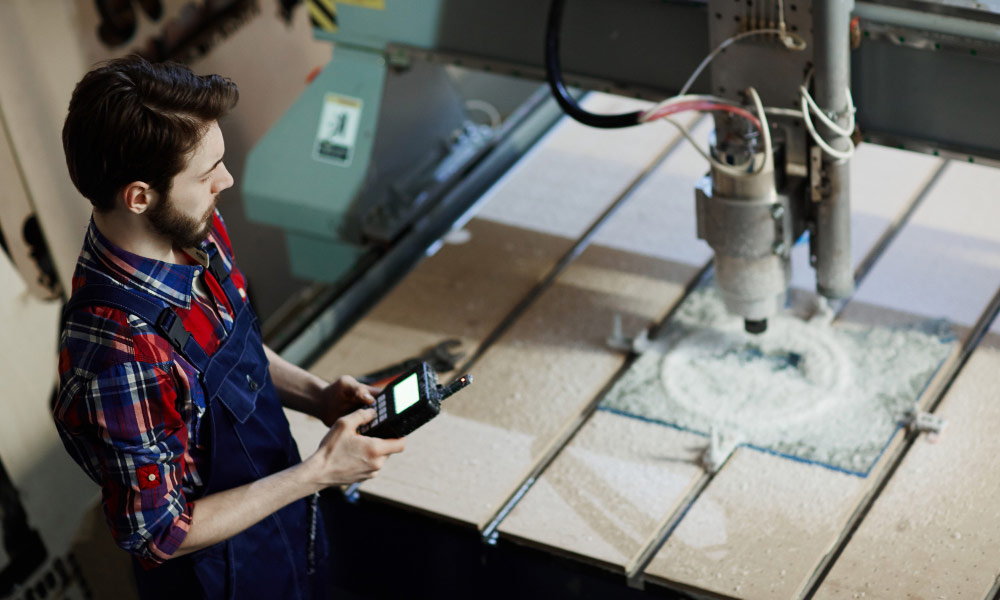
CNC stands for Computer Numerical Control. CNC machining is a production procedure in which the machines are controlled by means of computers.
The gadget follows virtual commands to cut, shape and finish the material.
The materials used include:
- Metal
- Plastic
- Aluminum
- Steel
- Brass
- Titanium
This process produces accurate and strong parts.
How CNC Machining Works
Let us apprehend the method little by little in easy phrases.
Step 1: Design
Engineers create 3-D designs using CAD software.
It suggests the design form, length and capabilities.
Step 2: Program Instructions
The design is converted to device code (G-code).
This code tells the system what to do.
Step 3: Machine setup
The material is attached to the machine bed.
Tools are chosen relying on the mission.
Step 4: Automatic slicing
The CNC device begins to reduce mechanically.
It drills, grinds or turns materials with precision.
Step 5: Closing
After processing, parts may be polished or covered.
The final product is prepared.
Why CNC Machining Is So Popular
Such as now, let’s look at the main reasons behind its popularity.
1. High Precision
CNC machines are very accurate.
They can produce parts with tiny tolerances.
Even complex designs come out perfect.
This is important for the aerospace and medical industries.
2. Consistent Quality
Manual machining may create errors.
But CNC machines repeat the same process every time.
This ensures uniform quality in mass production.
3. Automation Saves Time
CNC machines run automatically once programmed.
This reduces manual work and speeds up production.
Factories can produce more parts in less time.
4. Complex Shape Capability
CNC can make shapes that are hard to create by hand.
Examples include:
- Curves
- Threads
- Grooves
- Deep cavities
This flexibility supports advanced product design.
5. Works With Many Materials
CNC machines cut both soft and hard materials.
And this makes them suitable for many industries.
6. Reduced Human Error
Since computers control the process, mistakes are minimal.
This reduces waste and rework costs.
7. Scalable Production
CNC is perfect for both:
- Small batch production
- Large mass production
That is why companies rely on CNC machining services for different project sizes.
Industries Using CNC Machining
CNC machining supports many sectors.
Automotive Industry
Used to make:
- Engine parts
- Gearboxes
- Shafts
- Brake components
Aerospace Industry
Aircraft parts require extreme precision.
CNC produces:
- Turbine blades
- Structural frames
- Landing gear parts
Medical Industry
Hospitals use CNC-made:
- Surgical tools
- Implants
- Prosthetics
Electronics Industry
CNC creates:
- Device housings
- Heat sinks
- Connectors
Industrial Machinery
Factories need custom machine parts made by CNC.
Types of CNC Machines
Different machines perform different tasks.
CNC Milling Machines
Used to cut and shape surfaces.
CNC Lathes
Used to rotate material and shape round parts.
CNC Drilling Machines
Used to create precise holes.
CNC Grinding Machines
Used for smooth surface finishing.
Factors That Affect CNC Machining Cost
Many factors influence CNC machining cost.
Let’s explain them simply.
1. Material Type
Hard metals cost more to machine than plastics.
2. Design Complexity
Complex shapes need more time and tools.
This increases cost.
3. Production Quantity
Large orders reduce cost per part.
Small batches cost more per piece.
4. Machine Time
Long machining time increases the price.
5. Finishing Requirements
Such as Polishing, coating, or anodizing add extra cost.
6. Tolerance Level
Very tight tolerances require advanced machining.
This raises cost.
Advantages of CNC Machining Services
Such as Outsourcing to CNC machining services offers many benefits.
Professional Expertise
Experts handle programming and machining.
Advanced Equipment
Service providers use high-end machines.
Cost Efficiency
No need to buy machines yourself.
Faster Delivery
Such as experienced teams complete projects quickly.
CNC Machining vs Traditional Machining
Simple comparison:
Feature CNC Machining Manual Machining
Accuracy Very high Medium
Speed Fast Slow
Automation Yes No
Error Rate Low Higher
Complex Shapes Easy Difficult
This shows why CNC is more popular today.
Limitations of CNC Machining
Though powerful, CNC has some drawbacks.
High Initial Setup Cost
Machines and software are expensive.
Skilled Programming Needed
Trained operators are required.
Material Waste
Cutting processes remove material, creating waste.
(Additive methods like 3D printing waste less.)
Future of CNC Machining
CNC technology keeps improving.
Future trends include:
- AI integration
- Smart factories
- IoT monitoring
- Hybrid manufacturing
These advances will make CNC faster and smarter.
Conclusion
CNC machining is famous due to the fact that it’s far more accurate, rapid and dependable. It helps advanced production through producing complex, outstanding parts with consistency.
Industries international depend upon CNC machining services for car, aerospace, clinical and commercial manufacturing.
Although the value of CNC machining depends on fabric, layout and quantity, the lengthy-time period cost is high due to accuracy and efficiency.
Simply placed, CNC machining is the backbone of current manufacturing. It enables transforming digital designs into real products fast, correctly and on an industrial scale.