

For many of us, the transition to remote work wasn’t a carefully planned move. It happened quickly, often resulting in laptops perched on kitchen islands, ironing boards, or laps while sitting on the sofa. While working from home offers incredible freedom, the novelty of the “sofa office” wears off quickly when backache sets in and productivity dips.
You might think you need a dedicated spare room to create a proper workspace, but that simply isn’t the case. Some of the most productive setups are carved out of alcoves, spaces under stairs, or even the corner of a bedroom. It isn’t about the square footage you have; it is about how you utilise it.
Creating a functional workspace in a small area requires a shift in perspective. You have to stop looking at the floor plan and start looking at the potential of your vertical space and furniture choices. With a few smart decisions, you can transform a cramped corner into a hub of productivity that you actually enjoy using.
Identify Your “Zone”
The first step is finding your territory. If you don’t have a spare room, look for “dead space” in your home. This could be a wide hallway, the space behind a sofa, or a landing area. You only need about a metre of width to make it work.
One popular trend for those tight on space is the “cloffice” (closet office). By removing the rail from a built-in wardrobe and installing shelves, you can create a fully functional workspace that can be hidden away behind doors at the end of the day. This provides a crucial psychological separation between “work mode” and “home mode,” which is often the hardest part of remote working.
Choose the Right Surface
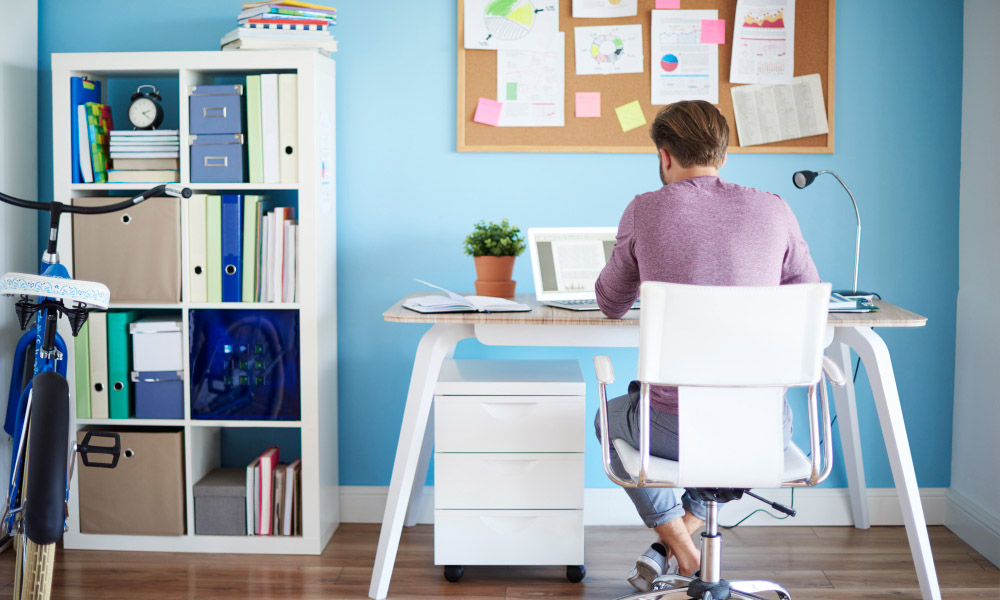
In a compact environment, your choice of furniture defines the room. A bulky, traditional executive desk will dominate a small room and make it feel claustrophobic. Instead, look for a home office desk designed specifically for small footprints.
Ladder desks are an excellent option as they use vertical height for storage while maintaining a slim profile. Alternatively, a wall-mounted floating desk keeps the floor visible, which tricks the eye into thinking the room is larger than it is. If you are truly pressed for space, a drop-leaf table that folds flat against the wall when not in use is the ultimate space-saver. The goal is to find a surface that accommodates your laptop and a notepad without eating up your living area.
The Throne of Productivity
If there is one area where you should never compromise, regardless of how small your space is, it is your seating. Working from a dining chair or a stool is a guaranteed recipe for long-term health issues. You spend eight hours a day in this spot; your body needs support.
Investing in a high-quality ergonomic chair is perhaps the single most important thing you can do for your work-from-home career. These chairs are designed to support the natural curve of your spine, keeping your posture aligned and reducing the risk of strain. When you are comfortable, you are less likely to fidget or take breaks due to discomfort, which directly boosts your focus.
Many people worry that an office chair will look out of place in a living room. However, modern ergonomic designs have moved past the bulky, black plastic look. You can now find sleek, fabric-upholstered chairs that offer lumbar support and adjustability while blending seamlessly with your home decor. Remember, productivity starts with comfort.
Vertical Storage and Lighting
When you can’t spread out, you must spread up. Use the wall space above your desk for shelving to keep your workspace clear. Clutter is the enemy of a small office; it makes a tight space feel suffocating. Use wall organisers, pegboards, or high shelving to store documents, stationery, and tech accessories.
Lighting is the final piece of the puzzle. A dark corner will make you feel lethargic. If you can’t be near a window, invest in a good desk lamp with adjustable colour temperatures. Cool white light helps with concentration during the day, while warmer light is better for evening tasks.
Reclaiming Your Work-Life Balance
Building a home office in a small space is about intentionality. By carving out a specific spot, choosing a streamlined home office desk, and prioritising your health with an ergonomic chair, you are telling your brain that this space is for work.
Once the workday is done, being able to step away—even if it is just two steps to the sofa—allows you to switch off. You don’t need a mansion to build a career; you just need a corner, a plan, and a comfortable place to sit.