


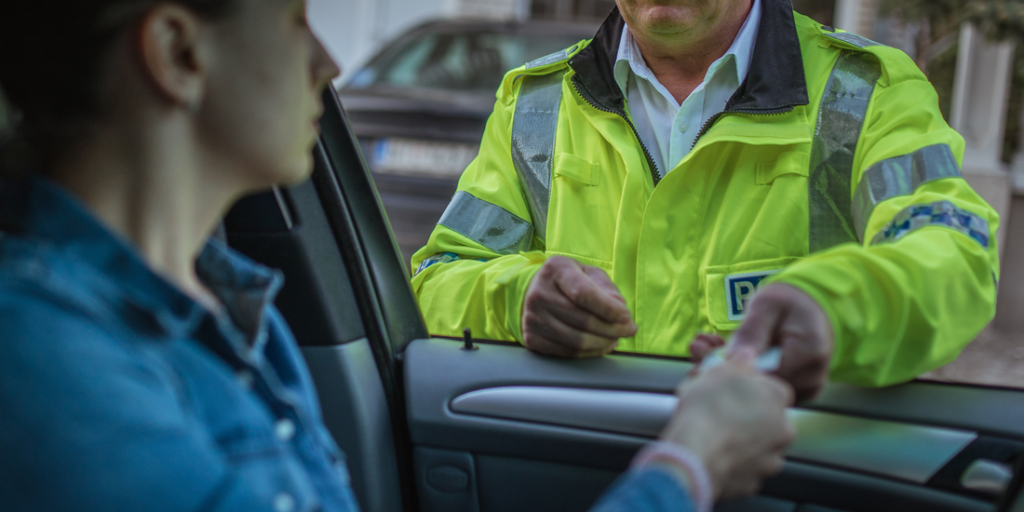
You see the lights. Your stomach drops. Your brain starts speed-running worst-case scenarios, job, licence, insurance, travel, your kid’s hockey schedule, all of it, while you’re trying to remember where your ownership even lives.
Breathe. Then drive like an adult. Signal, pull over safely, and stop doing “helpful” stuff like rummaging around the glove box while the officer’s walking up (it looks sketchy, even when it’s innocent). Keep your hands visible. That single move calms the whole moment down.
First 60 seconds: don’t make this weird
The officer is watching for the basics, how you stopped, whether you’re fumbling, whether you’re chatty in a panicky way, whether the car smells like a bar floor, whether your eyes look glassy, whether you hand over a credit card instead of a licence. Tiny details. Annoying, but real.
So do the boring stuff.
- Pull over safely and stay put.
- Window down enough to talk and pass documents.
- Hands on the wheel (passengers too, quiet hands help).
- Interior light on at night. It’s not a confession. It’s visibility.
- Don’t dig around until you’re asked for documents.
If you’ve got a drink in the cupholder from earlier, or cannabis packaging, or anything that looks like a problem, even if it’s “legal”, don’t start shuffling it around like you’re in a magic show. Leave it. Let your lawyer worry about optics later.
Right now, you want calm.
What you must hand over (and what you really don’t have to answer)
In Ontario traffic stops, police can ask for your driver’s licence, ownership, and insurance. That part isn’t optional, and playing games with it usually just buys you longer roadside time and a worse mood on both sides.
Documents? Yes.
Questions like “Where are you coming from?” or “How much have you had tonight?” are different. You’re not obligated to build the case for them with a cute little timeline of your evening, and those “only two beers” answers end up written down in police notes with a lot more confidence than you meant them.
Keep it plain.
- You can be polite without being chatty.
- You can say you’d rather not answer questions about drinking/drug use.
- You can ask if you’re being detained and what happens next.
Don’t argue the science. Don’t debate “I’m totally fine.” That’s not the vibe that helps you.
Short and steady wins.
RIDE stops and roadside screening: what’s actually happening
Ontario has RIDE programs (Reduce Impaired Driving Everywhere) and regular traffic enforcement where officers check sobriety. Sometimes you’re stopped randomly at a checkpoint. Sometimes it’s for a driving issue. Either way, the investigation usually moves in phases, and it helps to know what phase you’re in.
It’s not one big scene. It’s steps.
Phase 1: the stop and “observations”
This is the part nobody takes seriously until the disclosure shows up later, your speech, your coordination, your answers, your eyes, the smell, the open containers, the passengers, the music, the attitude, the “I’m just tired” story, all of it ends up in notes and sometimes video.
Yes, really.
Phase 2: roadside screening (ASD) or roadside coordination tests
For alcohol, the roadside tool is often an Approved Screening Device (ASD). For drug impairment, you might see a Standardized Field Sobriety Test (SFST), saliva screening, and sometimes a Drug Recognition Expert (DRE) process later.
None of this is a casual suggestion.
Phase 3: arrest/transport and station testing
If the officer forms “reasonable grounds,” things can move quickly: arrest, tow/impound, transport, and evidentiary testing on an Approved Instrument (breathalyzer/Intoxilyzer) at the station. Different device, different stakes.
And different rules.
“Do I have to blow?” The part people mess up
Here’s where panic does real damage: in Ontario, a “refusal” isn’t only the classic “Nope, not doing it.” It can be silence. It can be stalling. It can be half-hearted attempts. It can be “insufficient sample” over and over because you’re not actually trying, or you’re hyperventilating, or you’re melting down, or you think you’re buying time for alcohol to drop.
That last one is a myth. A costly one.
Refusal/failure allegations are often laid under Criminal Code s. 320.15, and the consequences can be brutal even if you weren’t “over.” If you’re trying to understand how police and courts treat these situations, especially the ugly “I tried but it kept saying insufficient” scenario, read about failure to provide a breath sample charges so you’re not guessing in the dark.
Guessing is how people talk themselves into handcuffs.
Roadside screening vs. station breath tests (yes, it matters)
Roadside ASD screening is meant to be quick and immediate. The station test is evidentiary, the one the Crown leans on in court, with specific procedures, timing, and multiple samples.
Different game.
So when people say, “I’ll just do it later at the station,” that’s not you negotiating. That’s you not complying with a demand that’s meant to be done right then.
Bad trade.
What if you have asthma, COPD, anxiety, or you genuinely can’t provide a sample?
People love the internet myth that asthma is an automatic “get out of blowing free” card. It’s not. Medical inability can be a real issue, but you don’t get to announce it once at the roadside and call it done, police will look at effort, behaviour, consistency, and what you say in the moment.
They’ll also look for proof.
- If you have a condition, say it plainly (don’t dramatize it).
- Try to comply unless you physically cannot.
- If you use an inhaler, mention it. If it’s in the car, tell them where.
- Afterward, get medical documentation fast if symptoms were real.
Also: panic attacks can feel like you’re dying. Courts still want evidence. That’s the harsh part.
Write it down later.
When do you get to call a lawyer in Ontario?
Canada has a right to counsel (Charter s. 10(b)), but it doesn’t mean you get to pause a roadside demand and start negotiating phone time like you’re ordering pizza. In impaired driving investigations, police can require immediate compliance first, then facilitate counsel at the appropriate time, often once you’re at the station or once the immediate investigative step is done.
It’s frustrating. It’s also normal.
If you do get the chance to call, don’t waste it recapping your entire life story. You want quick, specific guidance: what you’re being investigated for, what demands were made, what you’ve already done, and what’s happening next.
Keep it tight.
Immediate roadside consequences people don’t expect
Even before court, you can get hammered with administrative penalties, licence suspensions, vehicle impoundment, towing costs, depending on what’s alleged and what’s happening (alcohol, drugs, refusal/failure, prior history, novice status). The Ministry of Transportation (MTO) overlay is its own headache.
Your wallet feels it immediately.
- Vehicle impound can happen on the spot.
- Licence suspension can be immediate (administrative), separate from the criminal case.
- Novice drivers (G1/G2) and commercial drivers can trigger harsher admin consequences.
And no, being polite doesn’t cancel the paperwork. It just keeps the interaction from turning into theatre.
Take the win you can get.
What to say (and not say) when you’re stressed and the questions start
You can be respectful without being helpful. That sounds cold, but that’s how you avoid gifting the Crown a clean quote like “I had three and I’m fine,” which will magically become “three strong drinks” in someone’s memory later.
Don’t feed the machine.
Decent options:
- “I’d like to cooperate, officer.”
- “I don’t want to answer questions about drinking.”
- “Am I being detained?”
- “What are you asking me to do right now?”
Stuff to avoid:
- Jokes about drinking/weed (“I’m basically sober” is not cute).
- Angry lectures about your taxes.
- Confessing because you feel guilty about something unrelated.
Also, don’t lie with elaborate details. Simple denial followed by contradictions is how credibility dies.
Messy beats fake.
At the station: what usually happens if you’re arrested
Station procedures vary, but the general vibe is consistent: you’re processed, you’re given demands, breath samples are taken on an Approved Instrument if it’s an alcohol investigation, and everything is documented, times, observations, your statements, your attempts, the device readings, who did what.
Time becomes evidence.
You might be offered water. You might be watched for a set observation period. You might be told to wait between attempts. You might feel like you’re being rushed. Don’t take the bait and melt down, emotional spirals are later described as “agitated,” which then gets stapled to “impaired.”
Stay boring.
After you’re released: what to do in the next 24 hours
This is where people either protect themselves or torch themselves. You’re exhausted, embarrassed, and your phone is buzzing with friends asking what happened, so you vent in texts, toss jokes in group chats, or post some “OPP ruined my night” rant, then act shocked when that stuff comes back around.
Don’t create souvenirs.
- Write your timeline while it’s still fresh: where you were, what you ate/drank, when you drove, when you were stopped, what was said, what tests happened, times if you remember them.
- List witnesses (passengers, bartenders, hosts, rideshare receipts, anything that anchors time).
- Preserve documents: tow receipt, release paperwork, suspension notice, undertaking conditions, anything from MTO.
- If medical issues were real, get checked and get paperwork. Not weeks later. Now.
- Keep your mouth shut online. Private texts aren’t magically safe either.
Then call a lawyer. Quickly. Not after you “see how it goes.”
This moves fast.
When a DUI/impaired driving lawyer actually helps (not the fantasy version)
A good impaired driving defence isn’t just courtroom drama. It’s nitpicking timing, demands, grounds, procedures, access to counsel, video, notes, device operation, and whether what happened matched what the law requires, not what someone assumed was “close enough.”
Details are the case.
Depending on the facts, a lawyer may dig into:
- whether there was lawful basis for the stop and detention (Charter s. 9 issues)
- whether the demand was valid and properly made
- delays and access to counsel problems (Charter s. 10(b))
- device procedure and documentation (including maintenance logs and steps taken)
- “refusal” allegations that are really panic, confusion, language barriers, or medical limitation
No promises. No magic words. Just work.
That’s what you want.
A few Ontario-specific myths that need to die
Myth: “If I don’t say anything, they can’t charge me.”
Reality: They can rely on observations and test results (or refusal/failure). Silence isn’t a shield; it’s just not extra fuel.
Myth: “I can demand a blood test instead.”
Reality: You don’t get to choose the test. Police make lawful demands based on the situation.
Myth: “If I wait, my BAC drops, so refusing helps.”
Reality: Refusal/failure can be its own serious offence. You don’t outsmart the process, you usually just upgrade the problem.
Final word (not a pep talk)
If you’re pulled over in Ontario and impaired driving is in the air, your job is to stay calm, comply with lawful demands, stop talking, and stop improvising. The roadside isn’t where you win the argument. It’s where you avoid losing it.
This is general information, not legal advice. If you’re dealing with an impaired driving or refusal/failure situation, talk to a qualified Ontario lawyer about your specific facts.