

Camping in cold weather can be one of the most breathtaking outdoor experiences you’ll ever have. However, a severe cold is not something to be taken lightly. You must get prepared if you want your cold adventure to go smoothly. Checking the accurate weather data before you travel is a must-do, especially for the cold campings. It does not matter the type of camper you are; being safe in cold weather requires careful planning.
Having knowledge about camping in the harsh cold season should be a priority. If you’re not careful, you’ll come across trails covered in snow, deep freezes at night, and the silent menace of hypothermia. But worry not—you can be warm, secure, and comfortable while camping in chilly weather if you have the appropriate advice and some knowledge.
#1 Layer Up and Dress Smart
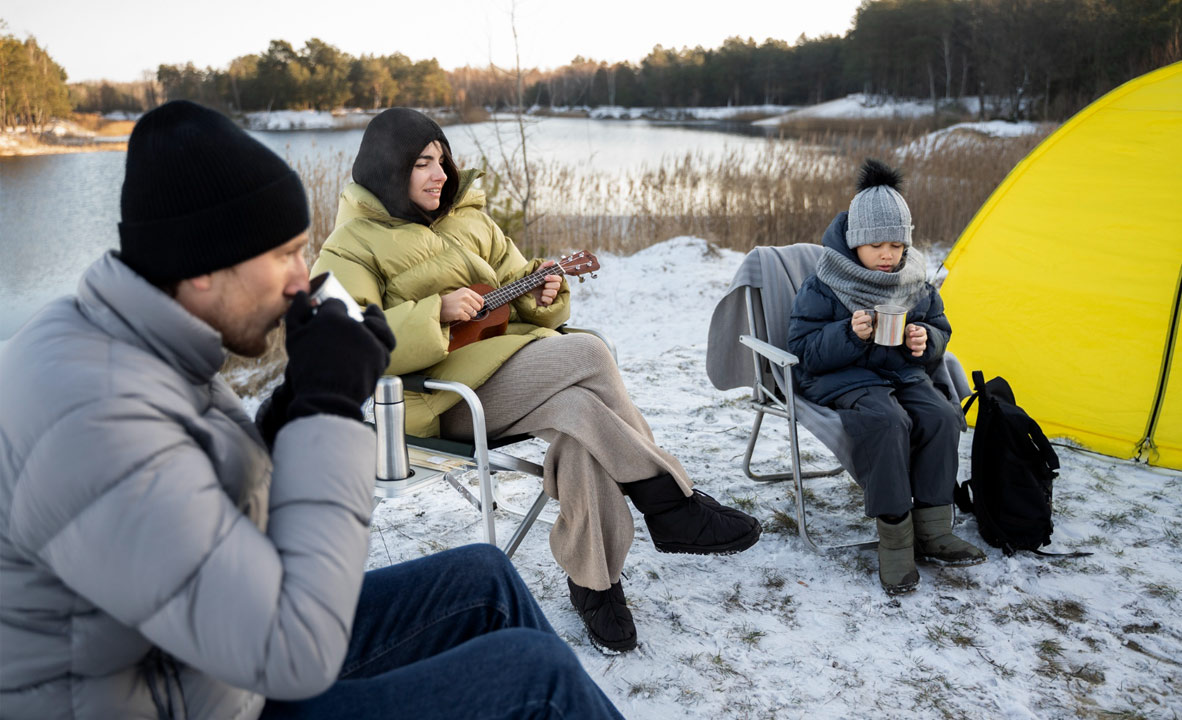
Cold times call for proper layering of clothes. Why? Because it enables you to swiftly adjust to changing circumstances. On a trail covered in snow, too warm? Remove a layer. Too cold when you’re relaxing? Put it back on.
The base layer is where your first thought should go. Cotton retains moisture and quickly cools you off, so it’s a bad idea. An insulating mid-layer, such as a puffy jacket or fleece, comes next. To protect it from snow and sharp winds, wear something waterproof on the outer shell.
In cold air, short breaths become foggy, and your entire body has to work harder to stay warm. Don’t cut corners here because your head and feet lose a lot of heat. Bring hand warmers and a neck gaiter if you need additional warmth; they are little heroes on chilly mornings.
#2 Hydrate and Eat Like You’re On a Mission
Although dehydration is just as real in the winter as it is in the summer, cold weather makes people less conscious of thirst. Your core temperature is much improved by sipping warm liquids in between mouthfuls of camp meals. Warm tea, hot cocoa, and soup are not only soothing; they support bodily processes.
Additionally, the cold causes your body to burn more calories. Throughout the day, high-energy foods like chocolate, cheese, nuts, and dried fruits make excellent snacks. A filling dinner can make the difference between a restless night and a comfortable one as night falls and the temperature drops.
#3 Mind Your Body and Be Prepared
You may not be aware of how cold can drain your energy. For this reason, maintaining an active lifestyle throughout the day is crucial. Take quick strolls around the camp, warm up with a few easy workouts before bed, and avoid slipping into your sleeping bag cold because it will take a long time to warm up and may cause you to shiver.
At first, symptoms of cold-related conditions, such as frostbite and hypothermia, are mild. More than just annoyances, numb fingers, slurred speech, and exhaustion are your body’s way of telling you to “turn up the heat.” Get someone in your group into warm clothing and a protected area right away if they begin exhibiting these symptoms.
Additionally, before you go, inform someone of your plans. Tell them where you’re going, when you plan to be back, and how they may get in touch with you. Although it is common sense, it is frequently disregarded.
#4 Tackle Condensation
We often overlook the little problems of camping in the cold and one of them is the moisture that hugs your sleeping bags.
Warm air and cold fabric combine to form frost when you breathe inside a tightly packed sleeping bag. Warmth might be lost, and your insulation dampened by the frost.
To combat this, shake out your sleeping bag in the morning sun and ventilate your tent whenever you can. Insulation works best when equipment is routinely dried, even if it’s just for a brief period of time while you’re eating near a heat source.
Conclusion
Camping in cold weather isn’t about enduring discomfort — it’s about embracing the chill with respect and preparation. With the right clothing, gear, campsite choices, and mindset, you can stay warm, safe, and genuinely enjoy the magic of winter outdoors. Cold weather doesn’t have to stop your adventure — it just asks you to think ahead.