

Office carpets collect far more than visible dirt. Each workday, dust, tracked-in soil, food particles, and moisture are pushed deep into the fibres by constant foot traffic. While routine vacuuming removes loose debris, it cannot extract the fine material compressed below the surface. Over time, this build-up affects not only how carpets look, but also how indoor office environments feel.
This is where commercial carpet steam cleaning Bankstown services become essential. Deep extraction removes embedded contaminants that routine cleaning cannot reach, helping offices maintain healthier indoor conditions and more consistent carpet performance.
Why office carpets trap debris so effectively
Commercial carpet is designed for durability rather than softness. Chairs roll along the same tracks, desks remain stationary, and hundreds of shoes pass over identical fibres each day. The repeated pressure forces fine particles downward into the backing, where standard vacuums struggle to reach.
This explains why office carpets can appear presentable while still contributing to stale air, lingering odours, or irritation for staff. The problem is not what is visible on the surface. It is what accumulates below eye level and beyond the reach of surface cleaning.
How steam cleaning removes what vacuuming cannot
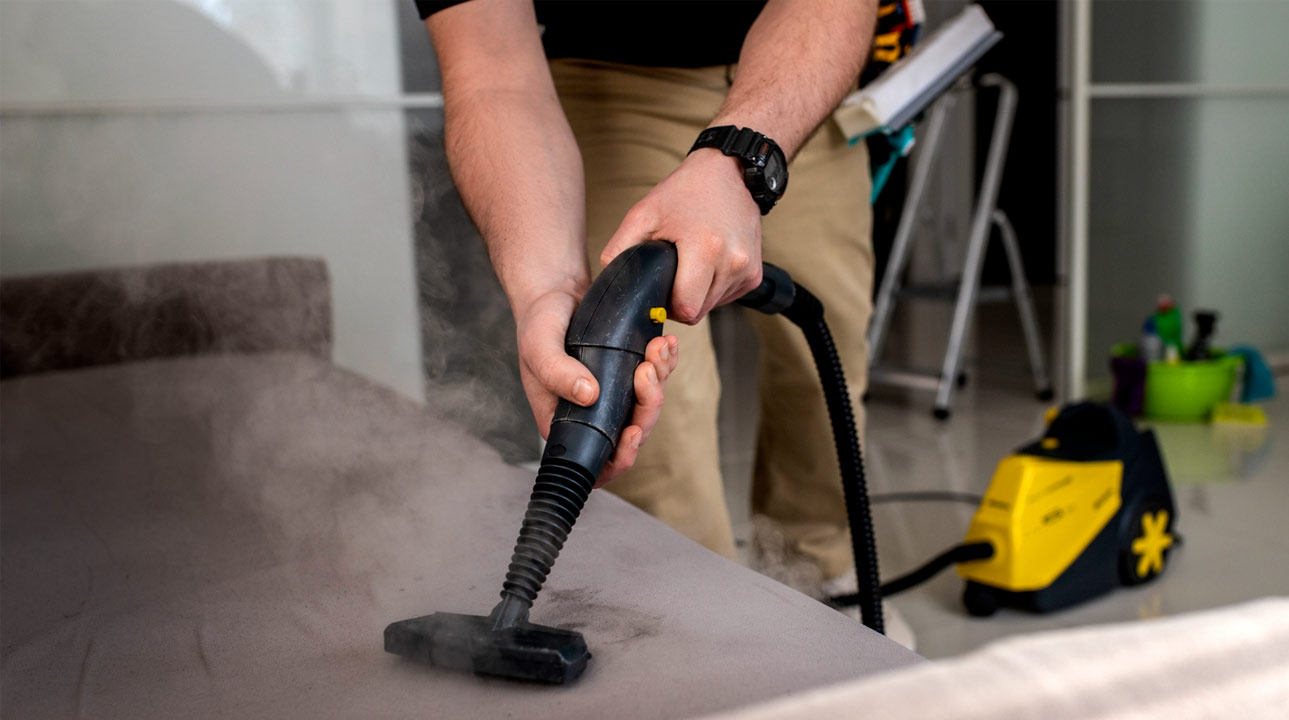
Steam cleaning, also known as hot water extraction, penetrates deeper into carpet fibres than surface methods. Heated water loosens compacted debris, oils, and residues, while powerful suction removes them from the carpet structure entirely.
Unlike methods that simply redistribute dirt sideways or deeper into the pile, steam extraction removes contaminants from the system. This effectively resets the carpet. Once embedded material is removed, ongoing vacuuming becomes far more effective rather than purely cosmetic.
Carpets and indoor air quality
Carpet fibres act like filters, trapping fine particles that would otherwise settle on hard surfaces. The issue arises when those particles are disturbed repeatedly by walking, airflow, or office activity.
Research highlighted by WIRED has shown that everyday movement across carpeted surfaces can lift fine particulate matter back into the air, a process known as resuspension. These particles can reach breathing height and circulate through enclosed spaces, particularly offices with limited ventilation.
Without periodic deep extraction, this material continues cycling through the air during the workday. Steam cleaning removes a significant portion of the particles responsible for this effect, reducing the amount that can be reintroduced into the environment.
Where steam cleaning has the greatest impact
Some areas of an office show clearer improvements after steam cleaning due to higher contamination levels. These typically include:
- Entry points exposed to outdoor grit and moisture
- Walkways between desks, offices, and shared rooms
- Staff kitchens and break areas where food particles are present
- Meeting rooms with closed doors and limited airflow
Targeting these zones helps prevent uneven wear across the rest of the carpeted space and reduces the spread of debris into lower-traffic areas.
What staff notice after deep extraction
The most noticeable changes are often environmental rather than visual. Offices feel less dusty, and the air feels lighter, particularly in enclosed rooms that previously felt stale or heavy.
Carpets also regain some softness underfoot as compressed fibres are released. High-use areas begin to feel more consistent with less-frequented zones, rather than standing out as flattened or rough patches. These improvements contribute to comfort without disrupting daily operations.
Health and comfort considerations in office spaces
While offices are not clinical environments, indoor comfort plays a role in productivity and wellbeing. Fine dust, allergens, and residues trapped in carpets can contribute to irritation, particularly in shared spaces where people spend long periods indoors.
Deep steam cleaning supports a cleaner baseline by removing material that would otherwise continue circulating. This is particularly relevant in offices where staff sit for extended hours, attend frequent meetings, or work in enclosed rooms.
How often offices should schedule steam cleaning
Most offices benefit from commercial carpet steam cleaning once or twice per year. However, frequency should reflect how the space is used rather than a fixed schedule.
Offices with high public access, frequent staff turnover, or food preparation areas may require more regular treatment. When marks reappear quickly after vacuuming, odours linger, or indoor air feels stale, surface cleaning is no longer sufficient.
Professional providers typically schedule steam cleaning outside business hours. With proper airflow, carpets are usually dry and ready for use by the next workday, minimising disruption.
Maintaining carpets between professional cleans
Steam cleaning works best when supported by basic maintenance practices, including:
- Using entry mats to reduce tracked-in debris
- Blotting spills immediately to prevent fibre penetration
- Moving furniture occasionally to prevent fixed wear paths
- Maintaining a consistent vacuuming schedule
These steps do not replace deep cleaning, but they reduce wear between services and help extend results.
When professional cleaning becomes unavoidable
Once vacuuming no longer improves carpet condition and airborne dust becomes noticeable during the day, deeper extraction is usually unavoidable. At that point, commercial carpet steam cleaning in Bankstown provides a full reset by removing embedded debris and restoring carpets to a manageable condition.
Rather than masking surface issues, steam cleaning addresses the source of the problem. For offices in Bankstown, it remains one of the most effective ways to maintain carpeted spaces that are cleaner, more comfortable, and easier to manage long term.